
Equipment Safety
Does our equipment provide protection from hazards?
DISCUSSION
ThePurplePlague
11/29/20252 min read
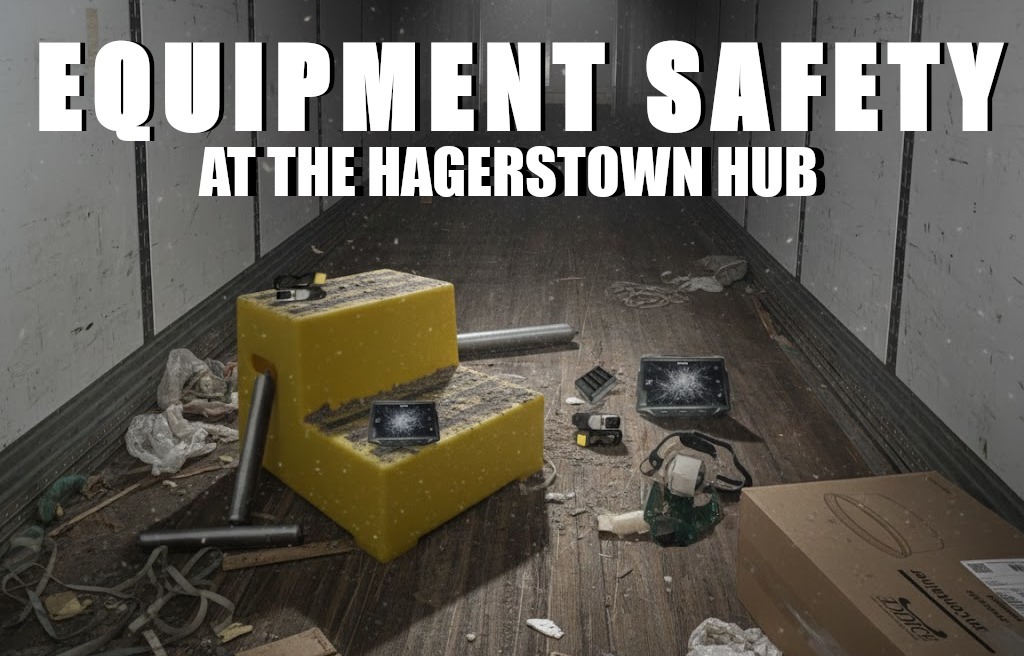
To our fellow team members at the Hagerstown Hub,
We’ve all seen the signs. We’ve all taken the training. The message from corporate is clear and unwavering: "Safety Above All" (POLICY-013). It’s the first thing we learn, and it’s supposed to be the guiding principle of every shift.
But as we look around the floor during the rush of Peak, a difficult question arises: Does the reality of our equipment match the promise of our policy?
The Equipment Reality Check
A safe workplace relies on well-maintained tools. When equipment fails, the risk of injury skyrockets. Yet, many of us are navigating a workspace where broken equipment feels like the norm, not the exception.
Recent observations from the floor have raised serious concerns about the condition of the very tools we rely on to keep us safe:
Damaged Rollers & Lines: When rollers are stuck, missing, or misaligned, packages don't flow—they jam. This forces us into a constant cycle of running back and forth to break jams, increasing the risk of strains, slips, and trips as we rush to clear the line.
Compromised Chutes: We’ve seen chutes that are damaged or improperly secured. A failing chute isn't just an annoyance; it’s an overhead hazard that can drop heavy boxes onto anyone standing below.
Faulty Rollerless Trailer Loader (RTLs): When the side guards or stops on an RTL are damaged, packages can fall over the sides, cluttering the floor and corrupting our egress paths. In a long rail trailer, a blocked path isn't just inconvenient—it’s a trap in an emergency.
Unstable Roller Tables: For those handling Incompatible (IC) packages, stability is key. Damaged roller tables can lead to unpredictable movement of heavy, awkward items, posing a direct crush hazard.
Scanner Failures: It might seem small, but a damaged scanner causes backups. When the belt keeps running but you can’t scan, the pile-up grows, forcing you to rush, twist, and strain to catch up. That rush is where injuries happen.
The Unreasonable Workflow
All of these equipment failures contribute to a larger issue: Unreasonable Workflow.
When the tools are broken, the only way to meet the productivity standard is to work harder, faster, and with less caution. We are forced to compensate for mechanical failures with our own physical effort, leading to strains, sprains, and exhaustion.
The policy says "Safety Above All." But when we are asked to work with damaged equipment at a pace that ignores these hazards, the message feels different. It feels like "Speed Above Safety."
We Can Fix This Together
This isn't about blaming; it's about improving. We believe that a safe hub is an efficient hub. We deserve equipment that works as hard as we do.
If you have experienced these issues—if you’ve had to dodge a falling box, clear a jam on a broken line, or rush to make up for a bad scanner—your story matters.
We are gathering anonymous data to show management exactly where the equipment is failing and how it impacts our safety. By documenting these hazards together, we can advocate for the repairs and maintenance we need to make "Safety Above All" a reality, not just a slogan.
Help us build a safer hub. Share your equipment safety story today.